
English| EUR
Suggested for you
More currencies
Choose a language
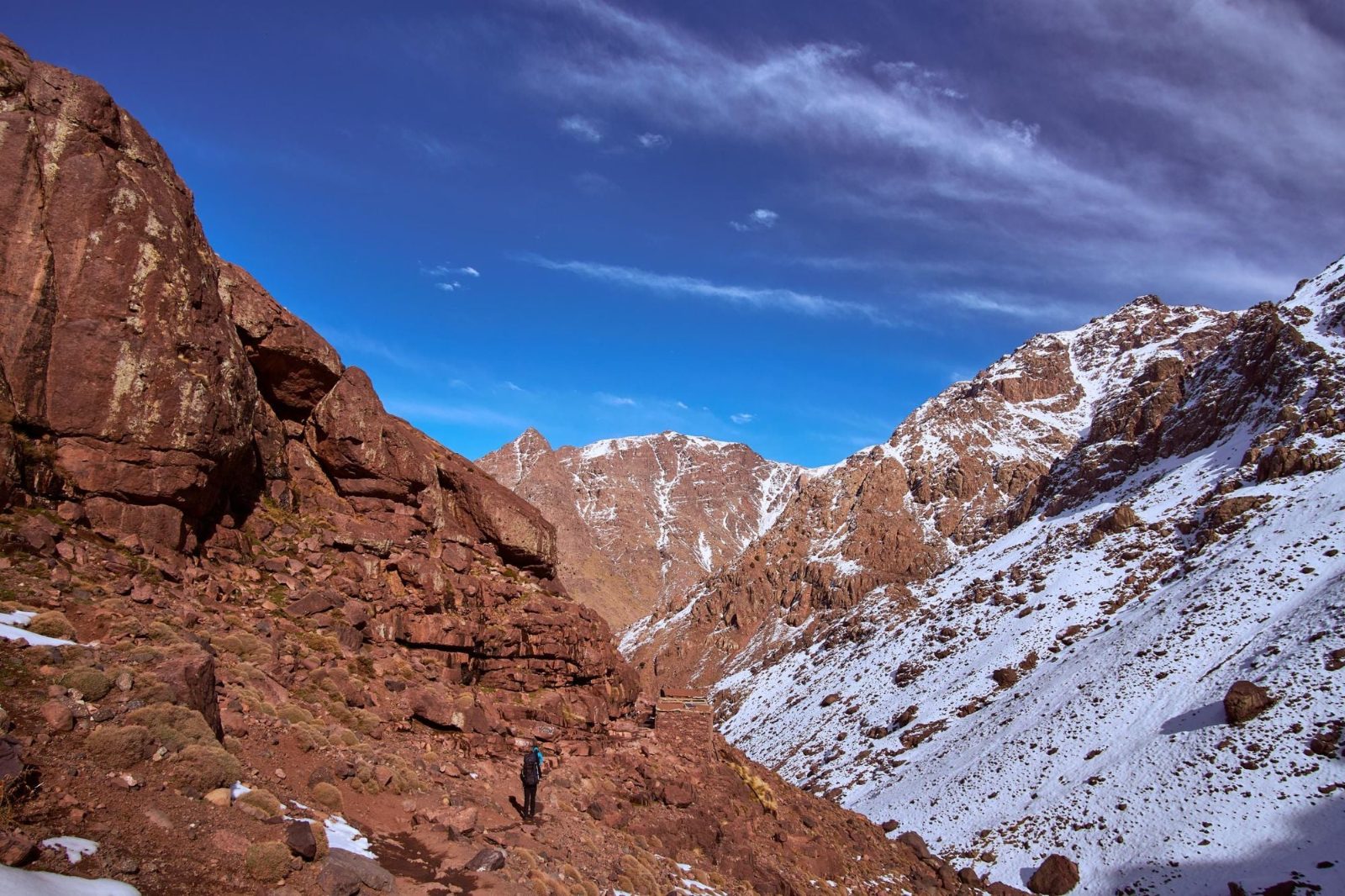
This is the physical sequence of the Toubkal ascent, from the trailhead at Imlil to the 4,167 m summit and back down. Most walkers spread it across two days of hiking, roughly 5-6 hours to the refuge and 7-9 hours for the summit day round trip.
Sign in at the Toubkal National Park checkpoint above Imlil before you start walking, where the 30 MAD conservation fee per person applies. Most people underestimate how much water they need from here, since reliable refill points thin out above Sidi Chamharouch.
Follow the mule track from Imlil (1,740 m) along the Mizane river, a steady 2-3 hour gradient of loose stone and dust to Sidi Chamharouch at around 2,350 m. The mistake here is starting too fast on easy ground and arriving at the shrine already tired.
Above Sidi Chamharouch the path steepens into long zigzags across open scree, gaining roughly 850 m over 2-3 hours to the refuges at 3,207 m. Slow your pace deliberately; this is where altitude first bites and rushing it turns into a headache by evening.
Spend the afternoon and night at refuge altitude, eating and drinking more than you feel like. People often skip food because of appetite loss at 3,200 m, then run out of energy on the summit push.
Leave the refuge in the 04:00–06:00 window to avoid heat and afternoon weather changes. Walking on cold, firm scree in the dark is easier than the same slope loose and sun-softened later.
The 960 m climb to the summit takes 3-4 hours over shifting scree and boulder fields with no technical climbing, only relentless uneven footing. Plant each step flat and keep your rhythm short; long strides slide backwards and drain your legs.
The last stretch eases onto a broad stony ridge to the metal tripod at 4,167 m. Wind here is stronger than on the slope below, and many people linger too long, losing body heat and daylight.
Retrace the scree to the refuge in 2-3 hours, then continue to Imlil the same or following day. Descent causes most injuries on this mountain, so control your speed and expect knees and quads to complain more than they did going up.
The optimal window for trekking Mount Toubkal occurs during the shoulder seasons of April to May and September to October, when temperatures are moderate and snow levels are manageable. Regardless of the month, climbers must adhere to the best arrival window of 04:00–06:00 to mitigate heat exposure and avoid afternoon weather instability.
Mild, 10°C to 20°C. Trails are clear but high patches remain.
Hot, 20°C to 30°C. Intense sun exposure requires early starts.
Stable, 10°C to 20°C. Clear skies and dry conditions prevail.
Cold, -10°C to 5°C. Requires technical mountaineering experience and gear.
Verdict: The best time to climb is April or October, targeting the 04:00–06:00 arrival window to ensure safe transit before afternoon weather shifts.
Toubkal is a non-technical ascent, but the altitude, loose scree and cold summit mean your kit list and paperwork need sorting well before you reach Imlil.
Mount Toubkal National Park is accessible to hikers throughout the week. The park remains open daily to accommodate trekking schedules.
Mount Toubkal is located within Toubkal National Park in the High Atlas Mountains of Morocco. The standard approach begins in the village of Imlil, which serves as the primary trailhead for trekkers.
Grand Taxi from Marrakech to Imlil
Local bus from Marrakech to Asni, then taxi to Imlil
Drive via R203 and unnumbered local roads to Imlil
The best arrival window is 04:00–06:00. An early start avoids heat and allows reaching the summit before afternoon weather changes.
Everything you need to know about how difficult is it to climb mount toubkal
Determining how difficult is it to climb mount toubkal depends largely on your cardiovascular fitness and altitude acclimation. While the trek is non-technical, the steep scree slopes and thin air at the summit pose significant physical challenges for most hikers.
You do not need ropes or ice axes for a standard summer summit, confirming that how difficult is it to climb mount toubkal is more a test of endurance than technical skill. Proper preparation remains essential to safely navigate the High Atlas landscape.
The best arrival window for your trek is 04:00–06:00 to minimize exposure to afternoon heat and changing weather conditions. Starting early ensures you reach the summit area while conditions are most stable.
There is a 30 MAD conservation fee per person required to enter the park. This fee helps maintain the trails and facilities within Toubkal National Park.
While some fit children may complete the trek, parents should consider how difficult is it to climb mount toubkal regarding altitude sickness and sustained physical exertion. It is generally recommended for older, experienced hikers rather than young children.
The primary difficulty stems from the loose volcanic rock and the steady gain in elevation as you approach the 4,167-meter peak. Navigating these steep paths requires steady footing and consistent pacing throughout your journey.
The park is open daily from 00:00–23:59, allowing for flexible start times for your ascent. Please verify local conditions before planning your specific departure to the trailhead.