
English| EUR
Suggested for you
More currencies
Choose a language
At 4,167 metres, Jebel Toubkal is the highest point in North Africa, yet the standard route requires no ropes, no ice axe in summer, and no technical climbing. What it does require is altitude tolerance, an early start, and a clear understanding of the permissions and access rules that govern Toubkal National Park. This page sets out the practical shape of the ascent before you commit to a date.
Quick answer
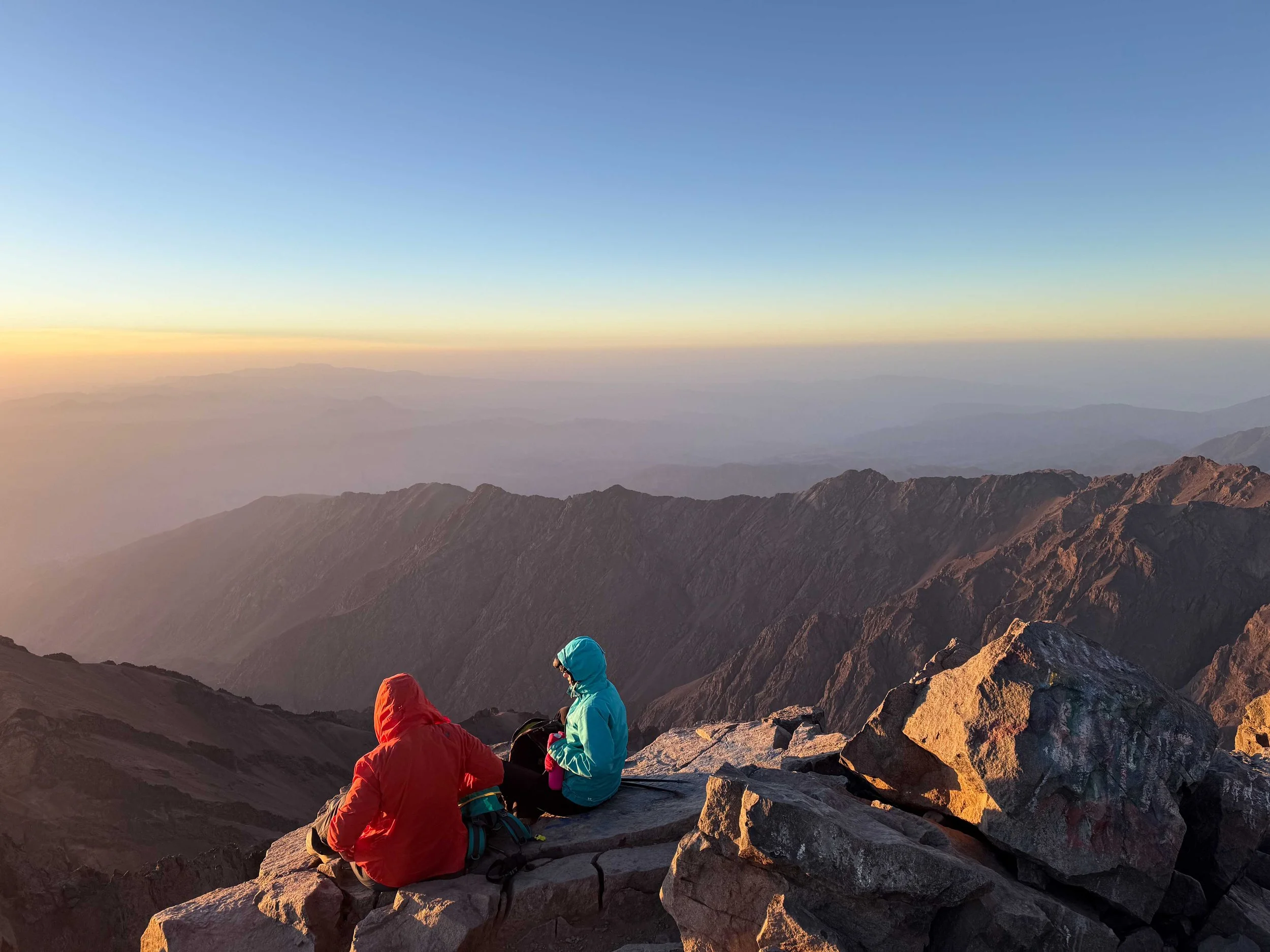
Most walkers climb Toubkal in two to three days from Imlil, trekking roughly 11 kilometres to the refuges at 3,207 metres, then summiting the following morning. Park access runs 00:00–23:59 daily, but arriving between 05:00 and 15:00 matters more: safety regulations typically discourage starting summit ascents after 15:00. A conservation fee of 30 MAD per person applies at park entry.
Toubkal is one of the few 4,000-metre peaks in the world reachable on a walking trail by an unroped hiker in ordinary boots — and it sits barely 60 kilometres from Marrakech. That proximity is deceptive. The trailhead village of Imlil already stands at 1,740 metres, and the summit adds another 2,400 metres of vertical gain, most of it on loose scree and glacial moraine. Understanding how to climb Toubkal begins with respecting that number rather than the distance. The standard ascent follows the Mizane valley south from Imlil, passing the shrine at Sidi Chamharouch before climbing steadily to the twin refuges — the Refuge du Toubkal (Refuge Louis Neltner) and the neighbouring Refuge Mouflons. Trekkers overnight there and leave in darkness for the south cirque route, the least technical of the two established lines. The north cirque is shorter and steeper. Both converge on the same summit ridge, marked by a metal pyramid and, on clear mornings, views stretching to the Anti-Atlas and the edge of the Sahara. Winter changes the calculation entirely: between roughly December and April, crampons and an ice axe become necessary, and the route is properly an alpine undertaking rather than a hike. Regulation is the other half of the picture. Toubkal National Park requires trekkers to be accompanied by an accredited mountain guide, a rule enforced at the Imlil checkpoint and reinforced since 2018. Muleteers and their mules carry loads to the refuges, which is why the local trekking economy of the Aït Mizane villages is built around the peak. Anyone researching a Jebel Toubkal ascent should treat guide accreditation, refuge reservations and acclimatisation as three separate bookings rather than one arrangement. Altitude sickness, not terrain, ends most attempts — headaches and nausea above 3,500 metres are common, and a second night at the refuge resolves more problems than any amount of fitness. Used sensibly, a how to climb toubkal guide is a scheduling document more than a technical one. Decide the season first, since it dictates equipment. Fix the number of nights second, since it dictates acclimatisation. Then confirm the guide and the refuge, in that order. The dedicated sections on this site break out the step-by-step ascent, the day-by-day itinerary, the arrival logistics from Marrakech, the seasonal weather windows, the fee structure and the kit list — each with the figures this overview deliberately leaves out.
“Altitude sickness, not terrain, ends most attempts on Toubkal.”
This procedure takes you from the trailhead at Imlil to the 4,167 m summit of Jebel Toubkal and back, the standard sequence covering roughly 21 km of walking and about 2,700 m of total ascent. Most walkers spread it over two days, with a pre-dawn summit push on the second morning.
Sign in at the park post in Imlil village and confirm your name, group size and intended refuge night; the conservation fee of 30 MAD per person is payable at park entry. Walkers who skip registration have no record on file if they fail to return, which delays any search.
Follow the mule track south out of Imlil along the Mizane valley to Aroumd, a broad gravel path with little gradient. Many people set off too quickly here and arrive at the refuge with nothing left in the legs.
Continue up the valley to the whitewashed shrine of Sidi Chamharouch, then take the switchbacks on the true left bank above it. The shrine itself is closed to non-Muslims, so stay on the main path rather than crossing the bridge toward it.
Cover the final ascent to the refuges at around 3,200 m, arriving with daylight to spare so you can eat, drink and rest properly. Underdrinking on this leg is the single most common cause of a headache that ends the attempt.
Set out in the dark for the South Cirque, following the scree gully above the refuge with a headtorch and a guide who knows the line. Safety regulations typically discourage starting summit ascents after 15:00, so an early departure is not optional.
Work steadily up the loose gully to the col, then follow the stony ridge north-east to the summit trig frame. People rush the scree and burn out; short paces with frequent brief pauses cover it faster than bursts of effort.
Fix a turnaround time before leaving the refuge and hold to it regardless of how close the summit looks. Descending the scree is slower and harder on the knees than climbing it, so budget generously for the return to Imlil.
This three-day plan suits reasonably fit walkers with no technical climbing experience who want a paced ascent of Jebel Toubkal (4,167 m) rather than a rushed push. It runs from Imlil to the summit and back over roughly 48 hours on the mountain, with one refuge night before and after summit day.
Set off from Imlil village (1,740 m) and walk the valley track past Aroumd, allowing 1-2 hours at a deliberate pace to start loading the legs gently.
Reach the whitewashed shrine village of Sidi Chamharouch (2,310 m) after about two hours more and break for 30-40 minutes; this is the last reliable place to buy water and mint tea.
The steepest sustained section of the day, gaining around 900 m over 3-4 hours to the Refuge du Toubkal / Les Mouflons pair at 3,207 m. Arrive with daylight to spare rather than pushing on.
Eat early, drink more than feels necessary, and sleep by 20:00. Some groups add a short 45-minute walk uphill from the refuge to help acclimatisation before dinner.
Leave the refuge in the dark and follow the South Cwm scree to the ridge, then the final rocky slope, typically 3-4 hours up. Pace so you can still hold a conversation.
Spend 20-30 minutes at the tripod marker on the 4,167 m summit, with the Anti-Atlas and Marrakech plain visible on clear days, then start down before afternoon wind builds.
Return to the refuge in around two hours, rest, and take a second night there. Descending scree tires knees more than the ascent tires lungs.
Retrace the valley to Imlil in 4-5 hours with a longer stop at Sidi Chamharouch, aiming to be down by early afternoon for onward transfers.
The most favorable windows for climbing Mount Toubkal are spring (April to May) and autumn (September to October) when stable weather prevails. These seasons provide the most reliable conditions for trekking before the arrival of winter snow or summer heat.
Clear days with temperatures 10°C–20°C
Ideal for stable weather and visible trails before peak summer heat.
Mild days with temperatures 8°C–18°C
Crisp air and consistent conditions make this a favored period for summit attempts.
Cold with snow, below 0°C
Requires technical gear, crampons, and ice axes for winter mountaineering.
—
Safety regulations recommend arriving between 05:00–15:00 to avoid late-day ascents.
Verdict: The concrete best window is April, May, September, or October, arriving at the park within the 05:00–15:00 window to ensure compliance with safety regulations.
Mount Toubkal is located within Toubkal National Park in the High Atlas range. The most accessible approach for climbers is traveling from Marrakech to the village of Imlil, which serves as the primary trailhead.
Direct transfer from Marrakech to Imlil via R203 and local mountain roads
Grand Taxi or local bus from Marrakech to Asni, followed by a shared taxi to Imlil
Plan your arrival to the region between 05:00 and 15:00. Safety regulations discourage starting summit ascents after 15:00, making early arrival essential for a successful trek.
Toubkal National Park operates on a continuous schedule, remaining accessible throughout the week to support mountaineers and trekkers.
Toubkal rewards preparation, so sort your paperwork, guide and gear in the weeks before you reach the trailhead rather than in Imlil the night before.
Everything you need to know about how to climb toubkal
Most trekkers begin the journey in Imlil, utilizing local mountain huts for accommodation during their ascent. Planning your route ahead ensures a smoother experience when you decide how to climb toubkal.
While independent hiking is possible, many visitors hire a local guide for safety and logistical support while learning how to climb toubkal. A guide helps navigate the High Atlas terrain and manages interactions with local services.
The entrance fee is 30 MAD per person, which is a conservation fee payable at the park entry. This fee supports the maintenance of the trails within Toubkal National Park.
The best arrival window is between 05:00 and 15:00, as safety regulations discourage starting summit ascents after 15:00. Following these timing guidelines is essential for anyone researching how to climb toubkal.
Children can participate if they are fit and acclimatized, but the trek is physically demanding due to high altitude. It is recommended to assess the child's fitness level before planning a trip to this Atlas Mountains peak.
The climb usually takes three days for a standard trek to allow for proper altitude acclimatization. This duration provides enough time to reach the refuge and complete the final summit push safely.
The most frequent mistake is failing to account for altitude sickness by ascending too rapidly. Proper pacing is crucial for a successful summit attempt in this UNESCO-recognized region.