
English| EUR
Suggested for you
More currencies
Choose a language
At 4,167 metres, Toubkal is the highest point in North Africa and the Arab world, yet it needs no ropes, no bolts and no technical climbing on its standard south cirque route. That combination draws thousands of walkers who have never been above 3,000 metres. This page explains where the real hazards sit — altitude, weather, scree and rockfall — and how experienced trekkers neutralise them.
Quick answer
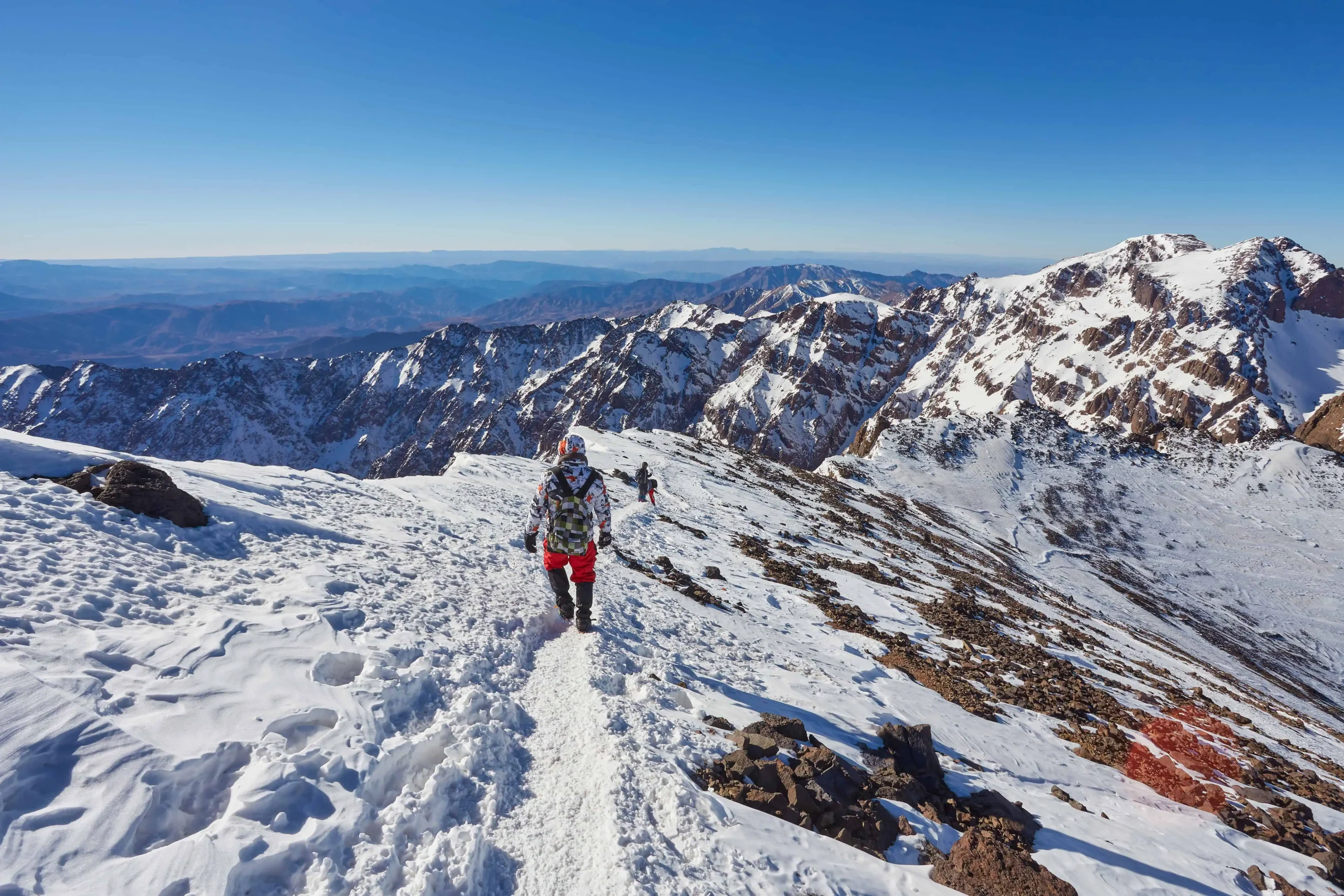
Yes — Mount Toubkal is generally safe for fit hikers on a guided trek, with no technical climbing required and the trail open every day, 00:00–23:59. The genuine risks are altitude sickness above 3,200 metres, rapid weather shifts, and loose scree on the descent. Winter ascents demand crampons, an ice axe and avalanche awareness, which shifts the peak into mountaineering territory.
Toubkal's mortality profile is unusual: most serious incidents on the mountain involve not falls but altitude and hypothermia, and they cluster on the final 800 metres of ascent rather than on any exposed section. The standard route from Imlil rises roughly 2,400 metres in two stages, passing the Sidi Chamharouch shrine before reaching the Refuge du Toubkal at about 3,207 metres. Nothing on that path requires a rope. What it does require is a body that has been given time to acclimatise, because the summit ridge sits high enough for oxygen availability to fall to roughly 60 percent of sea level. So when travellers ask is Mount Toubkal safe, the honest answer depends on the calendar and the itinerary rather than the mountain. From June to September the south cirque is a long, hot, dusty walk on rock and scree, and the High Atlas weather is broadly predictable. From November to April the same ground carries snow, ice and avalanche risk in the couloir below the summit plateau, and a Toubkal winter ascent becomes a genuine mountaineering objective. Between those extremes sit the shoulder months, when a clear morning can turn to sleet within an hour and the refuge fills with people who came dressed for Marrakech. Two structural safeguards matter. First, Toubkal National Park regulations require trekkers to be accompanied by a qualified mountain guide, a rule enforced at the Imlil trailhead; a licensed guide reads the weather, paces the ascent and carries the local knowledge that no map holds. Second, the Refuge du Toubkal and the neighbouring Refuge Mouflons provide fixed shelter at altitude, which turns a long single push into a staged climb and allows the body to adjust overnight. Muleteers, gendarmerie mountain rescue and a functioning radio network complete the picture — this is a managed, heavily walked peak, not a wilderness expedition. Read this Is Mount Toubkal safe guide as a framing document. The practical answer for most visitors is that a three-day itinerary with a licensed guide, an honest assessment of personal fitness, and a summit start inside the 03:00–06:00 window converts the mountain from intimidating to methodical. Those who get into difficulty are almost always the ones who compressed the schedule, skipped the acclimatisation night, or read the summer forecast and packed accordingly for a mountain that keeps its own weather.
“Toubkal is not a technical mountain, but it is a high one — and altitude does not negotiate with fitness.”
Most incidents on Toubkal come from decisions made before the summit push, not from technical difficulty on the mountain itself. These are the assumptions that most often turn a manageable trek into a rescue.
Treating 4,167m as a walk because there's no climbing
The route is non-technical, but altitude gain is the real hazard. Build in at least one acclimatisation night at the Toubkal refuge (around 3,200m) before attempting the summit, and learn the early signs of altitude sickness: headache, nausea, dizziness, loss of appetite.
Pushing higher while feeling unwell
Ascending with symptoms is how mild altitude sickness becomes HACE or HAPE. Descending several hundred metres is the only reliable treatment — turn around and go down, and tell your guide immediately rather than waiting to see if it passes.
Assuming Marrakech weather applies at the summit
Conditions at 4,167m can differ by 20°C or more, with wind chill, whiteout and ice on the upper scree. Check a mountain-specific forecast for Toubkal, not a city forecast, and accept that a guide may cancel the push.
Trekking without a licensed local guide
A licensed mountain guide handles route-finding in snow, judges turnaround times and coordinates rescue. Book through the site's trekking pages or call +212 524 485 626 rather than following GPS tracks alone.
Starting the summit push too late in the morning
Begin between 03:00 and 06:00 from the refuge. This window keeps you off the exposed upper slopes during afternoon wind and storm build-up, and leaves margin if the group slows.
Ignoring winter conditions on the upper mountain
From roughly November to April the summit route holds snow and ice, and crampons and an ice axe become necessary alongside a guide experienced in winter ascents. Confirm the current state of the route before committing.
The safest window for ascending Mount Toubkal occurs during the shoulder seasons of spring and autumn, when weather stability is highest. Daily safety relies on adhering to the 03:00–06:00 arrival window to clear the summit before afternoon weather shifts.
Clear, mild, 5°C to 15°C
Spring offers stable conditions and reduced snow cover on upper trails.
Hot, dry, 15°C to 25°C
Summer provides consistent weather but requires early starts to avoid heat exhaustion.
Cool, stable, 0°C to 12°C
Autumn features crisp air and clear skies, ideal for steady visibility.
—
Departing between 03:00–06:00 minimizes exposure to midday winds and potential afternoon storms.
Verdict: The optimal period for a safe climb is April, May, October, or November, utilizing the 03:00–06:00 arrival window for the final ascent.
Toubkal's 4,167 m summit demands specific gear and conditioning, so work through these steps in order from the weeks before your trek to the pre-dawn start.
Toubkal National Park remains accessible to visitors throughout the week, operating on a continuous 24-hour schedule to accommodate trekking logistics.
Everything you need to know about is mount toubkal safe
Mount Toubkal is generally considered safe for those with basic fitness, but the high elevation and rugged terrain demand respect. Proper preparation and awareness of your physical limits are essential for a successful journey.
To ensure your trekking experience remains positive, focusing on hydration and steady pacing is vital. Monitoring weather conditions before your departure is a standard practice for maintaining security in the High Atlas Mountains.
Climbing without a local guide is strongly discouraged, as local expertise is crucial for navigating the trails. Engaging a professional ensures you have support for managing terrain challenges and potential emergencies.
Altitude sickness is a genuine concern that affects whether is Mount Toubkal safe for visitors. Acclimatization is key, and trekkers should ascend slowly to allow their bodies to adjust to the thinning air.
Winter conditions bring significant hazards, including ice and heavy snow, which drastically change the safety profile of the climb. Specialized equipment and alpine experience become mandatory during these months to mitigate serious risks.
Access to the park requires a conservation fee of 30 MAD per person. This fee supports the management and preservation of the mountain environment for future visitors.
The best arrival window is between 03:00 and 06:00 to begin your summit push. Starting during these hours helps you manage the ascent efficiently while maximizing your chances of reaching the peak in favorable conditions.